Thinking about getting a helix piercing? Learn about the pain level, healing time, cost, aftercare tips, jewelry options, risks, and everything you need to know before getting a helix piercing.
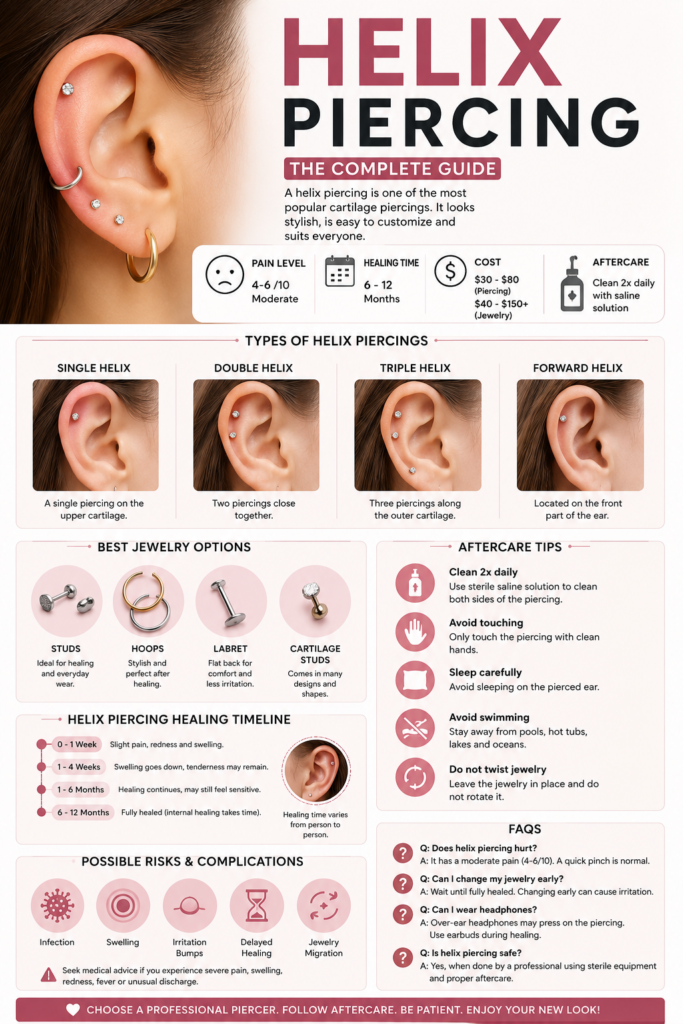
Helix Piercing: Everything You Need to Know Before Getting One
A helix piercing is one of the most popular ear cartilage piercings. It offers a stylish, modern look and can be customized with different jewelry styles. Whether you want a subtle stud or a decorative hoop, a helix piercing can match many personal styles.
Before getting pierced, it is important to understand the healing process, expected pain, aftercare routine, and possible complications. Proper care helps reduce the risk of infection and supports healthy healing.
What Is a Helix Piercing?
A helix piercing is placed through the upper outer cartilage of the ear. Unlike a standard earlobe piercing, it goes through firm cartilage, making it slightly more sensitive during the procedure.
Some people choose a single helix piercing, while others prefer double or triple helix piercings for a more unique appearance.
Types of Helix Piercings
There are several popular variations:
Single Helix Piercing
A single piercing placed along the upper cartilage. This is the most common choice and works well with both studs and hoops.
Double Helix Piercing
Two piercings placed close together, creating a balanced and fashionable look.
Triple Helix Piercing
Three piercings aligned along the outer cartilage. This style creates a bold statement and allows for creative jewelry combinations.
Forward Helix Piercing
Located on the front section of the upper ear, near where the ear connects to the head. It offers a distinctive appearance and is often paired with other ear piercings.
How Painful Is a Helix Piercing?
Pain varies from person to person. Most people rate helix piercing pain between 4 and 6 out of 10.
Because cartilage is firmer than the earlobe, you may feel:
- A quick sharp pinch during the piercing.
- Mild throbbing afterward.
- Tenderness for several days.
The discomfort usually decreases within the first week.
Helix Piercing Healing Time
Healing requires patience because cartilage receives less blood flow than soft tissue.
Typical healing timeline:
- Initial healing: 6 to 8 weeks
- Complete healing: 6 to 12 months
Even if the piercing feels comfortable after a few months, the inside may still be healing.
Helix Piercing Aftercare Tips
Following proper aftercare significantly improves healing.
Clean the Piercing Twice Daily
Use a sterile saline solution to gently clean both sides of the piercing.
Avoid Touching the Jewelry
Only touch the piercing after washing your hands thoroughly.
Sleep Carefully
Avoid sleeping on the pierced ear, especially during the first few months.
Do Not Twist the Jewelry
Modern piercing advice recommends leaving the jewelry in place instead of rotating it.
Avoid Swimming Early On
Pools, hot tubs, lakes, and oceans may introduce bacteria before the piercing has healed.
Best Jewelry for a Helix Piercing
Choosing high-quality jewelry reduces irritation.
Popular materials include:
- Implant-grade titanium
- 14K or 18K solid gold
- Surgical stainless steel (if suitable for your skin)
- Niobium
Common jewelry styles:
- Flat-back studs
- Labret posts
- Small hoops (usually after healing)
- Decorative cartilage studs
Possible Risks and Complications
Like any piercing, a helix piercing has some risks.
Possible issues include:
- Infection
- Swelling
- Irritation bumps
- Delayed healing
- Jewelry migration (rare)
Seek professional medical advice if you notice severe pain, spreading redness, excessive swelling, fever, or thick green discharge.
How Much Does a Helix Piercing Cost?
The price depends on your location, the piercer’s experience, and the jewelry selected.
Typical price range:
- Piercing service: $30–$80
- Premium jewelry: $40–$150 or more
Choosing an experienced piercer and quality jewelry is often worth the additional cost.
Can You Change Helix Jewelry?
It is best to wait until the piercing is fully healed before changing jewelry.
Changing it too early may:
- Irritate the piercing
- Restart the healing process
- Increase infection risk
If you need to change the jewelry sooner, visit a professional piercer.
Frequently Asked Questions
Is a helix piercing safe?
Yes, when performed by a trained professional using sterile equipment and followed by proper aftercare.
How long does swelling last?
Most swelling improves within one to two weeks, although mild tenderness can last longer.
Can I wear headphones?
Over-ear headphones may press against the piercing. During early healing, earbuds are usually the more comfortable option.
Should I get pierced with a hoop or a stud?
Most professional piercers recommend starting with a flat-back stud because it moves less and generally heals more comfortably than a hoop.
Final Thoughts
A helix piercing is a timeless cartilage piercing that offers both style and versatility. While it takes longer to heal than an earlobe piercing, proper aftercare and high-quality jewelry can make the healing process much smoother. By choosing an experienced piercer, cleaning the piercing consistently, and avoiding unnecessary irritation, you can enjoy a healthy, long-lasting helix piercing.